
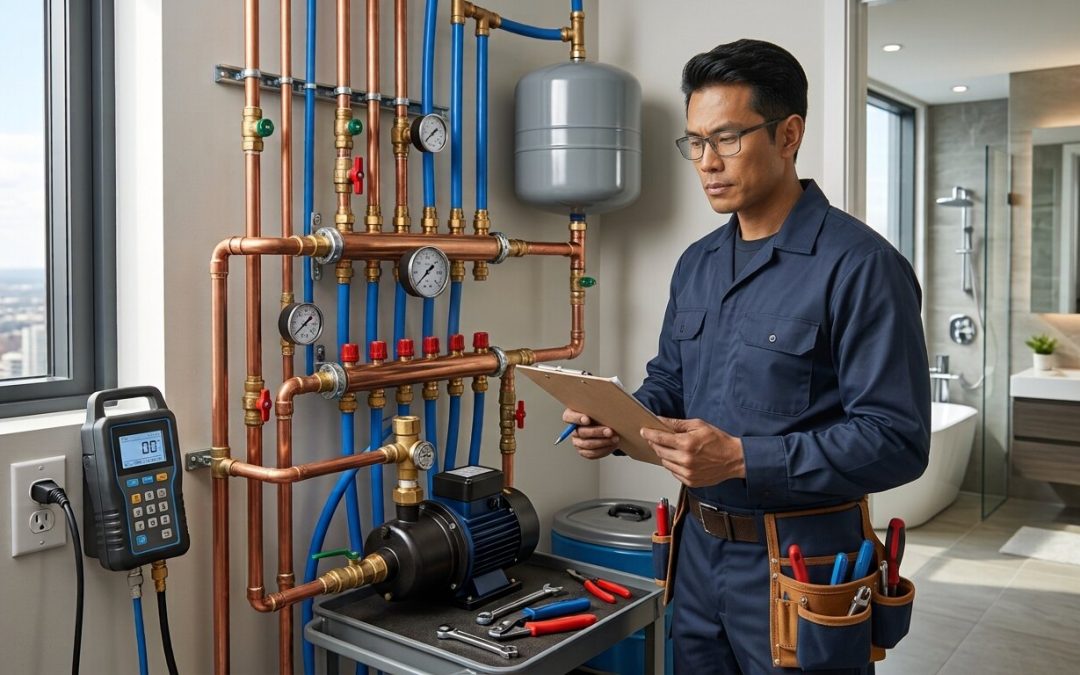
How to Fix Low Water Pressure on Your Top Floor
Low water pressure on your top floor is a common problem that affects many homes and buildings. Whether you live in a multi-story house, an apartment complex, or a commercial building, weak water flow upstairs can make everyday tasks like showering, washing dishes, and doing laundry frustrating and time-consuming.
Many homeowners assume low water pressure is simply an unavoidable reality of living on a top floor. However, in most cases, the issue can be identified and resolved with the right approach. Hidden plumbing problems, inadequate water supply systems, or faulty fixtures may be the real culprits behind weak water flow.
This is why understanding the causes of low water pressure and knowing the proper solutions play an important role in restoring comfortable water flow throughout your home. A professional plumbing assessment helps identify the root cause of low water pressure before it worsens, allowing property owners to take preventive action through proper repairs, system upgrades, or fixture replacements when necessary.
What Causes Low Water Pressure on Top Floors?
Low water pressure on upper floors is typically caused by a combination of factors related to physics, plumbing design, and system limitations.
During a professional inspection, trained plumbers examine various factors, including:
- Water supply line pressure
- Pipe diameter and condition
- Water meter capacity
- Pressure regulator settings
- Plumbing system age
- Fixture condition
- Water heater performance
- Local water supply issues
The goal is to determine whether the low pressure is caused by a building-wide issue, a problem specific to your unit, or a combination of both.
The Science Behind Top Floor Water Pressure
Water pressure naturally decreases as it travels upward. This is due to gravity working against the water flow. For every floor above ground level, water pressure drops approximately 0.43 psi (pounds per square inch) per foot of height.
In buildings with inadequate water pressure at the source or insufficient pumping systems, this natural pressure loss becomes significant by the time water reaches the top floor.
Why Low Water Pressure on Top Floors Is a Serious Issue
Not every instance of low water pressure indicates a major plumbing problem, and not every pressure issue shows obvious warning signs.
Some underlying problems remain hidden until professional equipment and experience are used to identify them.
Regular plumbing inspections help property owners:
- Detect hidden pipe blockages
- Prevent costly pipe damage
- Reduce water waste
- Protect plumbing fixtures
- Improve daily comfort
- Plan future plumbing maintenance
Early detection often prevents expensive emergency plumbing situations.
Identifying Hidden Causes of Low Water Pressure
Professional inspections can identify problems that are difficult to detect without proper training.
Common hidden causes include:
- Corroded or clogged pipes
- Faulty pressure regulators
- Leaking water lines
- Malfunctioning water meters
- Blocked aerators and showerheads
- Sediment buildup in pipes
- Undersized supply lines
- Faulty pressure booster pumps
These issues may significantly reduce water pressure even if the plumbing system appears functional from the outside.
Protecting Your Home and Comfort
Water pressure problems affect more than just convenience. They impact your daily quality of life and can indicate serious underlying plumbing issues.
Without proper inspections, low water pressure may lead to:
- Damaged plumbing fixtures
- Increased water bills
- Appliance malfunctions
- Pipe deterioration
- Water damage from leaks
- Reduced property value
Professional assessments help reduce these risks by recommending appropriate solutions before bigger problems develop.
Solutions for Low Water Pressure on Top Floors
Fixing low water pressure is not only about addressing the immediate symptom. It also involves improving the overall efficiency and health of your plumbing system.
Professionals may recommend:
- Installing a water pressure booster pump
- Upgrading to larger diameter pipes
- Replacing faulty pressure regulators
- Cleaning or replacing clogged pipes
- Installing a pressure tank system
- Repairing or replacing water meters
- Upgrading plumbing fixtures
- Implementing a whole-house water pressure solution
Proper solutions ensure water flows consistently and reliably to every floor of your property.
The Importance of Regular Plumbing Maintenance
Routine maintenance works together with inspections to improve long-term water pressure and plumbing reliability.
Services may include:
- Pipe inspection and cleaning
- Pressure regulator testing
- Water heater maintenance
- Fixture and aerator cleaning
- Leak detection and repair
- Water quality testing
Regular maintenance reduces unnecessary stress on your plumbing system and helps extend its lifespan.
Why Poor Water Pressure Increases Over Time
Aging infrastructure, mineral buildup, and gradual pipe deterioration can worsen water pressure issues even when problems are not immediately visible.
Common developments include:
- Increasing sediment accumulation
- Worsening pipe corrosion
- Declining pump performance
- Developing leaks
- Expanding blockages
A professional inspection helps identify these developing issues before they cause complete system failure.
Commercial Properties Benefit from Water Pressure Solutions
Businesses often have plumbing systems serving multiple floors and require consistent water pressure for:
- Office buildings
- Hotels
- Apartment complexes
- Shopping centres
- Restaurants
- Schools
Regular assessments help property managers reduce liability risks while maintaining a safe and comfortable environment for employees and visitors.
Preventive inspections also minimize unexpected disruptions caused by plumbing failures.
When Should a Water Pressure Assessment Be Performed?
Property owners should consider scheduling an assessment when:
- Water pressure suddenly drops
- Multiple fixtures show low pressure
- Water flow is inconsistent
- Pipes make unusual noises
- Water bills increase unexpectedly
- Renovation or construction occurs nearby
- The building is over 20 years old
- New appliances are installed
Regular inspections are especially important for multi-story buildings with complex plumbing systems.
Why Professional Assessments Are Better Than DIY Fixes
While homeowners can identify obvious problems, many plumbing issues require professional knowledge and experience.
Plumbing specialists understand:
- Water pressure dynamics
- Pipe system design
- Pressure regulation technology
- Diagnostic techniques
- Building code requirements
They also use specialized tools and follow industry best practices to provide accurate recommendations.
Professional assessments reduce guesswork and help property owners make informed decisions.
Long-Term Benefits of Fixing Low Water Pressure
Investing in proper water pressure solutions provides numerous long-term advantages.
Benefits include:
- Improved daily comfort
- Consistent water flow on all floors
- Lower utility bills
- Reduced plumbing emergencies
- Extended pipe lifespan
- Better appliance performance
- Increased property value
- Greater peace of mind
Preventive care is often more cost-effective than responding to emergency plumbing situations after damage has occurred.
Choosing a Professional Plumbing Company
When selecting a plumbing service provider, consider companies that offer:
- Experienced plumbing specialists
- Comprehensive system inspections
- Professional pipe repair services
- Water pressure solutions
- Emergency plumbing services
- Proper equipment
- Safety-focused work practices
Working with experienced professionals helps ensure your plumbing system is managed safely and responsibly.
Conclusion
Fixing low water pressure on your top floor is an essential part of responsible property maintenance. It helps identify hidden plumbing issues—such as leaks, blockages, or failing pressure regulators—before they escalate into costly damage. Poor pressure often signals underlying problems that, if ignored, can lead to pipe damage, water waste, and reduced appliance lifespan.
Whether for residential homes, commercial buildings, apartments, or public spaces, regular assessments provide valuable information that supports efficient plumbing systems and comfortable living conditions. A professional inspection can pinpoint whether the cause is a simple fix—like a clogged aerator or faulty valve—or something more serious, such as corroded pipes, an undersized supply line, or a failing pump.
Combined with professional repairs, maintenance, and system upgrades when necessary, water pressure solutions help protect both your property and your quality of life while preserving the long-term value of your home. From installing booster pumps and pressure tanks to replacing outdated galvanised pipes with modern PEX or copper, the right solution restores strong, consistent flow to every tap and shower—no matter how high the floor. Addressing pressure issues proactively is far cheaper than repairing the damage that neglect can cause.
FAQs
1. What causes low water pressure on top floors?
Low water pressure on top floors is typically caused by gravity, inadequate water supply pressure, corroded or clogged pipes, faulty pressure regulators, or insufficient pumping systems. The height of the building means water must travel further, losing pressure along the way.
2. How can I increase water pressure on my top floor?
Solutions include installing a water pressure booster pump, upgrading pipe sizes, replacing faulty pressure regulators, cleaning clogged pipes, or installing a pressure tank system. A professional plumber can recommend the best solution for your specific situation.
3. Can low water pressure fix itself?
No. Low water pressure typically worsens over time without intervention. The underlying causes, such as pipe corrosion or sediment buildup, continue to develop until properly addressed by a professional.
4. When should I call a plumber for low water pressure?
You should call a plumber if you experience sudden pressure drops, low pressure affecting multiple fixtures, unusual pipe noises, or if your building is over 20 years old. Professional diagnosis ensures the correct solution is applied.
5. What happens after a water pressure assessment?
After completing the inspection, the plumber will explain the condition of your plumbing system and recommend suitable solutions. Depending on the findings, this may include installing a booster pump, repairing pipes, replacing regulators, or implementing ongoing maintenance to ensure consistent water pressure.