
What to Do When Water Leaks From Your Upstairs Neighbor Ceiling in Malaysia
Waking up to water dripping from your ceiling is one of the most stressful experiences for any homeowner or tenant in Malaysia. Whether you live in a high-rise condo in KL, a walk-up apartment in Penang, or a terrace house in Johor, a leak from above can quickly damage furniture, wiring, and your peace of mind—while straining relationships with your neighbor.
In Malaysia’s humid climate, plumbing failures, waterproofing breakdowns, and monsoon rains make ceiling leaks common. Many people either ignore the problem until it worsens or confront their neighbor in anger—both leading to costly repairs and tension.
Knowing the correct steps when water leaks from your upstairs neighbor is essential. Acting quickly and professionally protects your property, health, and legal rights under Malaysian law. This guide walks you through every step, from the first drip to final resolution.
What Causes Water Leaks From an Upstairs Neighbor?
A ceiling leak from the unit above is rarely just “water.” It usually indicates a failure in one of several systems within the building. Understanding the potential sources helps you identify the problem faster and communicate more effectively with your neighbor and building management.
Common causes include:
- Burst or leaking water pipes within the walls or floors
- Faulty bathroom waterproofing that has deteriorated over time
- Overflowing toilet or basin due to blockages
- Clogged floor drains that cause water to pool and seep through
- Washing machine hose leaks that go unnoticed
- Air-conditioner drainage issues that drip continuously
- Roof or gutter leaks for top-floor units
- Poor renovation work by the upstairs owner that damaged existing waterproofing
In older Malaysian buildings, especially pre-2000, plumbing may be corroded or outdated. Even newer condos can develop leaks within years due to shoddy construction or renovation. Identifying the likely source helps you communicate clearly with your neighbor and building management—and helps professionals diagnose the issue faster.
Why You Should Not Ignore a Ceiling Leak
Some leaks start as a slow drip and seem harmless. You might be tempted to place a bucket underneath and hope the problem resolves itself. However, in Malaysia’s climate, even a small leak can escalate quickly into a major disaster.
Ignoring a ceiling leak can lead to:
- Structural damage to your ceiling and walls that weakens the building
- Electrical short circuits and fire risk from water contacting wiring
- Mold and mildew growth that spreads rapidly in humid conditions
- Respiratory health problems for you and your family
- Damaged furniture, electronics, and personal belongings
- Higher repair costs later when the damage has spread
- Disputes with your neighbor that become difficult to resolve
Early action prevents expensive repairs and legal complications. The longer you wait, the more damage occurs—and the harder it becomes to determine responsibility. In Malaysia, where rainy seasons last months, a small leak can quickly become a flooding nightmare that disrupts your entire household.
Immediate Steps to Take When Water Leaks From Your Ceiling
Before you knock on your neighbor’s door, take these urgent steps to protect your home and your belongings. These actions will also serve as evidence if you need to make a claim later.
1. Contain the Water
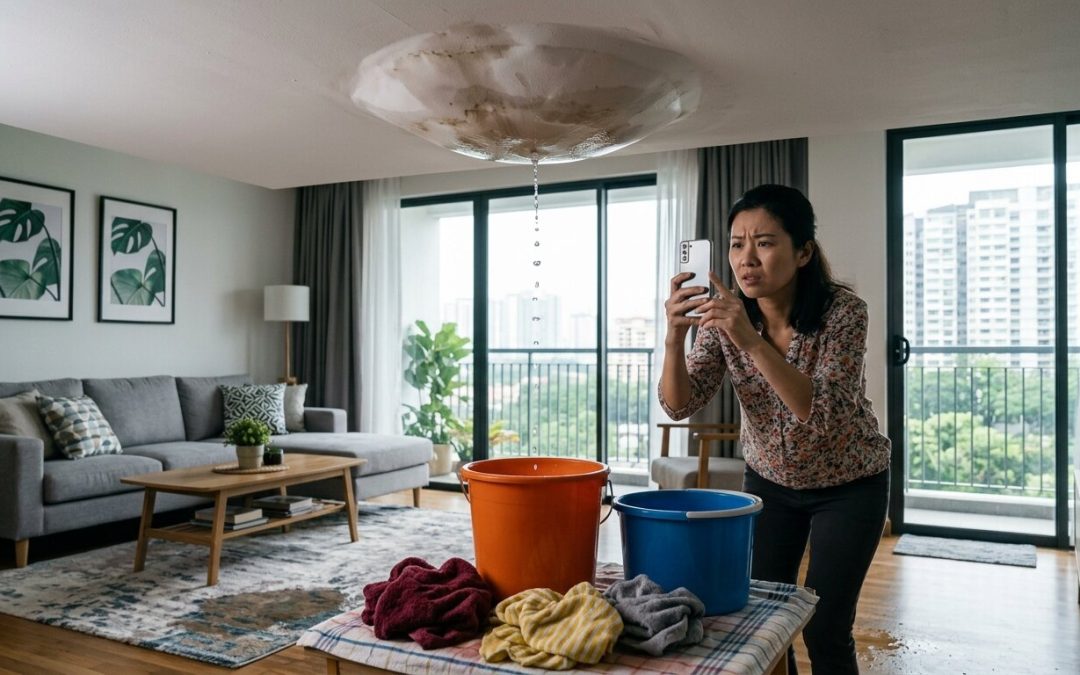
Place buckets, basins, or towels under the leak immediately. If the water is dripping near electrical outlets or lights, switch off the power to that area at the circuit breaker. Water and electricity are a dangerous combination, and electrocution is a real risk.
2. Move Your Belongings
Shift furniture, electronics, and valuables away from the affected area. If you have expensive items that cannot be moved, cover them with plastic sheets. Document everything before moving it so you have a record of what was in the affected area.
3. Take Photos and Videos
Record the leak, the damage, and the date and time. Take wide shots showing the location of the leak in the room, and close-up shots of the water damage. This evidence is crucial for insurance claims, management complaints, and potential legal action.
4. Puncture a Small Hole (If Safe)
If water is pooling in a bulge on the ceiling, a small puncture can release the pressure and prevent a larger collapse. Only do this if it is safe and you have switched off the electricity to that area. Use a small nail or drill bit and have a bucket ready to catch the water.
5. Turn Off Your Water Supply (If Applicable)
In some cases, the leak may be from a shared pipe that runs through your unit. Turning off your main water valve can help reduce further damage. However, this may not help if the leak is entirely within your neighbor’s unit.
6. Inform Your Neighbor Immediately
Once you have contained the immediate damage, inform your upstairs neighbor as soon as possible. They may not be aware of the leak, and quick action on their part can prevent further damage to both units.
How to Talk to Your Upstairs Neighbor
This is often the hardest part. Malaysian culture values good neighborly relations, but you also have rights—how you approach the conversation determines whether it’s resolved quickly or becomes a long dispute.
Be calm and polite. Explain what you’re seeing and ask them to check their unit. Avoid accusations—most neighbors are unaware of the leak and will cooperate. Remember, they may also be victims of a hidden plumbing problem they didn’t cause.
If they refuse or deny responsibility, don’t argue. Escalate to the JMB or Management Corporation (MC). Losing your temper only worsens the situation and may damage your case if it goes to tribunal.
What If the Neighbor Refuses to Cooperate?
If your neighbor refuses access or denies the leak, you have several options. Do not give up. The law in Malaysia provides avenues for resolving these disputes.
Your options include:
- Request JMB mediation to facilitate a resolution
- Lodge a complaint with the Tribunal for Strata Management (TPS)
- Engage a professional plumber to trace the source and provide a report
- Send a formal letter of demand through a lawyer
- Consult a lawyer for civil action if the damage is significant
In Malaysia, the Tribunal for Strata Management can order the responsible party to carry out repairs. The tribunal is designed to be accessible and affordable for ordinary Malaysians, so you do not need to spend a fortune on legal fees.
Understanding Who Pays for the Repair
This is a common source of confusion and conflict. In general:
- If the leak is from the neighbor’s internal plumbing, they pay for the repair
- If the leak is from a shared pipe, the JMB or MC may pay
- If the leak is from structural defects, the developer may be liable during the defect liability period
Always get the cause confirmed by a licensed plumber before agreeing to share costs. A professional report will clearly identify the source of the leak and help determine liability.
Documenting Everything for Insurance and Claims
Whether you plan to claim from your neighbor, the JMB, or your own insurance, documentation is key. Malaysian insurers require thorough evidence before approving claims.
Keep:
- Photos and videos of the leak and damage
- Dates and times of all incidents
- Receipts for damaged items and repair costs
- Plumber reports and professional assessments
- Correspondence with neighbor and management
- Medical bills if your health has been affected
In Malaysia, some home insurance policies cover water damage from external sources. Check your policy carefully and speak to your insurance agent about what is covered.
When to Call a Professional Plumber
You should engage a licensed plumber when:
- The source of the leak is unclear or difficult to trace
- The leak is severe or spreading rapidly
- There is risk of electrical damage or fire
- The neighbor refuses access to their unit
- You need a professional report for legal or insurance purposes
A professional plumber can use moisture meters and thermal cameras to trace leaks accurately without unnecessary damage. In Malaysia, look for plumbers registered with relevant authorities and experienced with high-rise buildings.
Preventing Future Ceiling Leaks
Once the immediate problem is solved, take steps to prevent recurrence. Prevention is always better than cure, especially in Malaysia’s challenging climate.
- Encourage regular plumbing checks in the building
- Raise waterproofing issues at AGM or JMB meetings
- Install water sensors in vulnerable areas of your home
- Maintain good communication with your neighbor
- Keep your own plumbing in good condition
Preventive action is always cheaper than emergency repairs. By working together with your neighbor and management, you can create a safer living environment for everyone.
Conclusion
A ceiling leak from your upstairs neighbor is more than an inconvenience—it’s a property, health, and legal issue requiring prompt, careful action. By documenting damage, communicating politely, involving the JMB, and engaging professionals when needed, you can resolve it without unnecessary conflict.
Whether you live in a condo, apartment, or flat, understanding your rights under Malaysian strata law is essential. Acting quickly and keeping detailed records are the keys to success. Don’t let a ceiling leak ruin your home or neighborly relationships—take action today and protect what matters most.
FAQs
1. What should I do first when water leaks from my ceiling?
First, contain the water and move your belongings. Switch off electricity near the leak, take photos, and then inform your neighbor and the JMB. Taking these immediate steps prevents further damage and creates a record of the incident.
2. Can I sue my neighbor for a water leak in Malaysia?
Yes, you can file a claim at the Tribunal for Strata Management or pursue civil action if the neighbor refuses to cooperate. Documentation is essential for a successful claim.
3. Who is responsible for the repair cost?
It depends on the source. If the leak is from the neighbor’s internal pipes, they are responsible. If it is a shared pipe, the JMB or MC may bear the cost. A professional plumber’s report will determine liability.
4. How long does it take to resolve a ceiling leak dispute?
It can take days to months, depending on cooperation and whether the Tribunal is involved. Acting quickly and keeping good records usually speeds up the process.
5. Can I claim from my insurance for water damage?
Some home insurance policies cover water damage from external sources. Check your policy and submit photos, receipts, and reports to support your claim.