
The Real Reason Your Condo Water Pressure Is Terrible
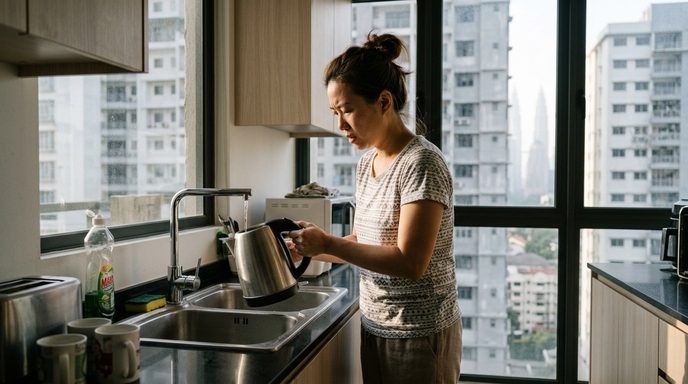
When you bought or rented your condo in KL or Selangor, nobody handed you a manual explaining your shower would feel like a light drizzle at peak hours—or that filling a kettle would test your patience.
We’re told this is normal, just how high-rise living works—install a booster pump and move on.
But low water pressure in Malaysian condos is rarely an accident. It’s the result of a chain of decisions by developers, building managers, and sometimes the water authority. Understanding that chain is the key to fixing the problem—or knowing who to hold accountable.
The Physics of Water in a High-Rise
In a landed house, water flows directly from the municipal main—pressure comes from gravity and the supply system. In a high-rise, water must be mechanically lifted. The journey looks like this:
- Water enters the building from the Air Selangor main supply
- It fills the ground-level storage tanks
- Booster pumps push the water upward through vertical risers
- It reaches rooftop or intermediate tanks
- Gravity then distributes it down to individual units
- A pressure-reducing valve at your unit controls the final flow
The critical insight here is that your water pressure is only as strong as the weakest link in this chain. A perfectly maintained unit means nothing if the building’s booster pump is undersized or the rooftop tank is clogged with sediment.
Cause #1: The Developer Cut Corners And You’re Paying for It
Many Malaysian condos, especially from the 2010s boom, were built with plumbing meeting minimum standards—not excellent performance. Common developer-side issues include:
- Booster pumps that were sized for the original number of units but became inadequate as the building added more residents or commercial spaces
- Cheap galvanized or low-grade pipes that begin to corrode and narrow within a decade
- Insufficient water tank capacity for the building’s actual population
- Poorly designed riser configurations that create pressure bottlenecks on upper floors
- Pressure-reducing valves installed at factory defaults that are too low for taller buildings
The problem is that these defects often don’t surface until years after the developer has handed over the building and dissolved their responsibility. By then, the strata management committee (JMB or MC) is left to deal with the consequences—usually with a limited budget and limited technical expertise.
Cause #2: The Building’s Shared Infrastructure Is Aging
Even well-built condos experience decline over time. The shared plumbing infrastructure—the tanks, pumps, and main risers—takes a beating from constant use.
What typically happens in a building that’s 10 to 20 years old:
- Sediment and rust accumulate in the main storage tanks, reducing effective capacity and flow
- Booster pump impellers wear down, reducing their ability to push water to upper floors
- Check valves fail, causing water to flow backward and reducing pressure
- Pipe joints develop slow leaks that bleed pressure before it reaches your unit
- Pressure-reducing valves drift out of calibration over the years
The challenge is that fixing shared infrastructure requires collective action and collective funding. A single resident complaining about weak pressure rarely triggers a building-wide pump replacement. It usually takes a critical mass of complaints, a formal resolution at the AGM, and significant capital expenditure.
Cause #3: Air Selangor’s Supply Isn’t Always Consistent
It’s tempting to blame the building, but external supply matters too—especially in the Klang Valley. Air Selangor manages a massive network serving millions; during high demand, drought, or maintenance, supply pressure can drop significantly.
Signs your low pressure is external rather than building-related:
- Your neighbors in nearby landed properties are also experiencing weak pressure
- The problem is worse during dry seasons or after scheduled maintenance
- Water appears discolored or aerated when it first comes out of the tap
- Pressure improves late at night when citywide demand drops
If this sounds familiar, the solution isn’t in your building—it’s at the municipal level. You can check Air Selangor’s official channels for supply disruption notices and pressure advisories in your area. Sometimes, simply knowing that the issue is temporary and external can save you from unnecessary plumbing expenses.
Cause #4: Your Own Unit’s Plumbing Is the Weakest Link
Even if the building’s infrastructure is perfect and the municipal supply is strong, your unit’s internal plumbing can still sabotage your pressure.
The most common in-unit culprits are surprisingly mundane:
- A shower head that’s clogged with years of mineral deposits
- A faucet aerator that’s never been cleaned or replaced
- A partially closed stop valve under the sink that nobody remembers turning
- Old flexible hoses that have collapsed internally, restricting flow
- A faulty pressure-reducing valve that was installed incorrectly
- A water filter system that wasn’t designed for low-pressure environments
These issues are usually cheap and easy to fix—but they’re often overlooked because residents assume the problem must be something bigger.
The Appliance Damage Nobody Warns You About
Low water pressure doesn’t just make showers uncomfortable. It actively damages the appliances you spent good money on.
Here’s what happens:
- Water heaters rely on a minimum flow rate to activate.
- Washing machines use water pressure to fill their drums within a set time.
- Dishwashers with low pressure means poor cleaning performance and potential pump failure.
- Refrigerators with water dispensers may fail to dispense properly or produce inconsistent flow.
Over time, the cumulative cost of replacing these appliances far exceeds what you’d spend on a proper pressure diagnosis and fix. Yet most residents only realize this after the damage is done.
Your Rights as a Condo Resident in Malaysia
Many residents feel powerless, assuming they have no recourse for shared infrastructure defects. But Malaysian law offers protection.
Under the Strata Management Act 2013, the JMB or MC must maintain common property—water tanks, booster pumps, main risers. If neglect affects residents’ water supply, the management body has a legal obligation to act.
If management is failing, you can:
- Raise the issue formally at the Annual General Meeting (AGM)
- Request copies of maintenance records and pump service logs
- Lodge a complaint with the Commissioner of Buildings (COB) for your area
- Engage a independent plumber to provide a written assessment that can be presented to the JMB/MC
For defects in your own unit that stem from developer negligence, you may have recourse through the Housing Development Act—especially if your unit is still within the defect liability period.
Practical Solutions That Actually Work
Now that you understand the causes and your rights, here’s a practical hierarchy of solutions—from cheapest and simplest to most involved.
Start with the easy wins:
- Remove and soak your shower head and faucet aerators in vinegar to dissolve mineral buildup
- Check that all stop valves under sinks and behind toilets are fully open
- Replace old flexible hoses that may have collapsed internally
- Test your pressure at different times of day to identify patterns
Move to unit-level fixes:
- Install a unit-level booster pump
- Replace your pressure-reducing valve if it’s old or stuck
- Upgrade to fixtures designed for low-pressure systems
Escalate to building-level action:
- Document your pressure readings over time and present them to the JMB/MC
- Propose a building-wide pump servicing or replacement at the AGM
- Gather support from other residents who are experiencing the same issue
- If necessary, file a formal complaint with the COB
If all else fails:
- Consider whether the building is worth the ongoing frustration
- For renters, you have the right to raise this with your landlord as a habitability issue
When to Call a Professional
Not every pressure problem needs a plumber—but if aerators, valves, and hoses check out, bring in proper diagnostics. Beware plumbers who immediately recommend a booster pump without testing pressure at multiple points to find the root cause.
Ask for:
- A written diagnosis explaining where and why pressure is being lost
- Pressure readings at different points in your system
- A clear recommendation that addresses the root cause, not just the symptom
- Transparency about whether the issue is unit-level or building-level
A proper diagnosis typically takes less than an hour and costs far less than an unnecessary pump installation.
The Bigger Picture: Why This Keeps Happening
Low water pressure in Malaysian condos isn’t just plumbing—it’s a symptom of how high-rises are planned, built, and managed. Developers minimize costs, managers minimize maintenance, utilities are stretched thin, and residents are least consulted.
Until transparency and accountability improve, low pressure will remain a fact of life. But residents can still act—by understanding the system, documenting problems, and demanding better.
Final Thoughts
Your condo’s water pressure isn’t a mystery—it results from identifiable factors within your control, your building’s, or neither. Stop accepting weak pressure as normal. Ask where it’s lost, who’s responsible, and what evidence you need. Whether cleaning a shower head, installing a pump, or filing with the COB, make an informed decision.
FAQs
1. Is low water pressure in Malaysian condos actually normal?
No. While it’s common, it’s not “normal” in the sense of being unavoidable. It’s usually caused by specific, identifiable issues—undersized pumps, aging pipes, clogged fixtures, or municipal supply problems. Each of these has a solution.
2. Can I force my building management to fix the water pressure?
Under the Strata Management Act 2013, the JMB or MC is responsible for maintaining shared water infrastructure. If you can demonstrate that they’re failing in this duty, you can escalate to the Commissioner of Buildings (COB). However, the process requires documentation and persistence.
3. Will installing a booster pump in my unit solve the problem?
It can help, but it depends on the cause. If the building’s main supply to your unit is adequate but your internal pipes or fixtures are restricting flow, a booster pump won’t help much. If the building’s pressure is genuinely too low for your floor level, a unit-level pump can make a significant difference—provided your building management approves it.
4. How do I know if the problem is Air Selangor or my building?
Compare notes with neighbors in nearby landed properties. If they’re also experiencing low pressure, the issue is likely external. If only your building is affected, the problem is internal. You can also check Air Selangor’s website for supply disruption notices in your area.
5. What’s the first thing I should check if my water pressure suddenly drops?
Start with the simplest causes: a clogged shower head or faucet aerator, a partially closed stop valve, or a recently installed water filter. If those are fine, check whether the problem is affecting your entire unit or just one fixture. This will help you narrow down whether the issue is in your plumbing or the building’s supply.