
How to Detect & Fix Concealed Underground Pipe Leaks
Water is one of Malaysia’s most precious resources—and a common source of hidden property damage. Whether you own a terrace house, shoplot, or factory, underground plumbing is constantly under pressure. Unlike visible leaks, concealed underground leaks often go unnoticed for months, silently eroding foundations, damaging landscaping, and inflating water bills. Malaysia’s heavy rainfall and shifting soil increase deterioration risk.
Many pipe accidents occur because problems stay hidden until too late—corroded pipes, loose joints, root intrusion, or slab leaks show no surface signs. Professional underground pipe leak detection protects properties and ensures water efficiency, identifying hazards before they become dangerous and allowing preventive repair, replacement, or maintenance.
What Is Underground Pipe Leak Detection?
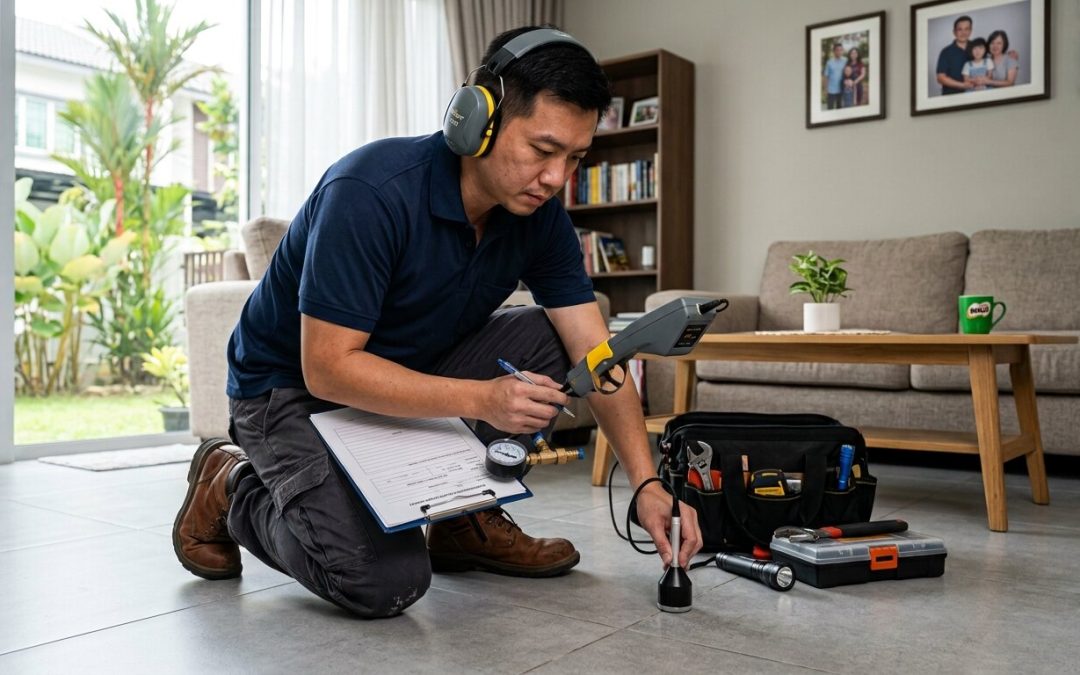
Underground pipe leak detection is a professional evaluation of a property’s hidden plumbing system to identify the location and severity of water leaks without causing unnecessary destruction to the property. It is a specialized service that combines advanced technology with expert knowledge to diagnose plumbing issues that are invisible to the naked eye.
During the assessment, trained plumbing specialists examine various factors, including:
- Water pressure fluctuations across the system
- Acoustic (sound) levels underground to detect escaping water
- Moisture levels in walls, floors, and ceilings
- Structural integrity of the piping materials
- Signs of soil erosion or subsidence
- Water meter movement when all taps are closed
- Thermal imaging of floor slabs to detect temperature anomalies
- Surrounding environment and landscaping for unusual water pooling
The goal is to determine whether a leak exists and pinpoint its exact location to minimise repair costs and property damage.
Why Pipe Leak Detection Is Important in Malaysia
Not every damp patch on a wall is a major leak, and not every leak shows obvious surface signs. Some internal pipe defects remain hidden until professional equipment and experience are used to identify them. In Malaysia, high water pressure, shifting soil conditions, and the prevalence of older plumbing infrastructure can accelerate pipe deterioration.
Regular pipe leak inspections help property owners:
- Detect hidden pipe bursts before they cause structural damage
- Prevent foundation damage and sinkholes
- Reduce water bills caused by undetected leaks
- Protect landscaping, paving, and driveways
- Improve property safety for occupants
- Plan future plumbing maintenance effectively
Early detection often prevents costly emergency situations. A small leak that is caught early might cost a few hundred ringgit to repair, while a burst pipe that goes unnoticed for weeks could result in thousands of ringgit in damage to floors, walls, and foundations.
Identifying Hidden Pipe Hazards
Professional inspections can identify problems that are difficult to detect without proper training. Common hidden hazards in Malaysian properties include:
- Internal corrosion of galvanised pipes, which is especially common in buildings constructed before the year 2000
- Joint failures in PVC pipes caused by soil movement or poor installation
- Slab leaks under tiled floors, which can go unnoticed until the floor begins to buckle
- Root intrusion into underground pipes from nearby trees, a frequent issue in landed properties
- Soil settlement causing pipe misalignment and subsequent joint stress
- High water pressure damage leading to pipe fatigue and eventual failure
- Leaking water tanks or underground storage systems
These issues may significantly weaken your property even if it appears dry on the surface.
Protecting People and Property
Large underground leaks occurring near homes, offices, schools, or factories require immediate attention. In Malaysia, a burst underground pipe can lead to a range of serious consequences, including:
- Ground subsidence or sinkholes, which pose a direct safety risk to occupants and pedestrians
- Damage to flooring and foundations, often requiring extensive and costly repairs
- Wall cracks and structural instability, which can compromise the integrity of the building
- Mould growth due to persistent dampness, creating health risks for occupants
- High utility bills from Air Selangor, Syabas, or other state water providers
- Damage to neighbouring properties, potentially leading to legal disputes
Professional assessments help reduce these risks by recommending appropriate repairs before accidents occur.
Supporting Healthy Plumbing Systems
Pipe leak detection is not only about identifying dangerous leaks. It also helps improve the overall health and efficiency of your plumbing system. Just as a healthy tree is more resistant to disease, a well-maintained plumbing system is more resilient to future problems.
Specialists may recommend:
- Pressure reducing valve installation to prevent excessive stress on pipes
- Pipe re-lining or coating to extend the lifespan of existing pipes
- Replacement of old galvanised pipes with modern PPR or PVC alternatives
- Waterproofing improvements in wet areas such as bathrooms and kitchens
- Regular water meter checks to catch small leaks early
A well-maintained plumbing system is generally stronger, safer, and more resistant to future leaks. It also operates more efficiently, reducing water waste and lowering utility costs over time.
The Importance of Regular Plumbing Maintenance
Routine maintenance works together with leak detection to improve long-term safety and reliability. Services may include:
- Checking water meter accuracy and monitoring usage patterns
- Valve inspections to ensure proper function and prevent pressure buildup
- Water tank cleaning to remove sediment and prevent corrosion
- Pipe insulation checks to protect against temperature fluctuations
- Drainage flushing to prevent blockages that can stress the plumbing system
Regular maintenance reduces unnecessary stress on pipes and helps extend their lifespan.
Why Storm Damage Increases Pipe Risks
Heavy rain, strong winds, and thunderstorms are a regular occurrence in Malaysia, particularly during the monsoon seasons. While storms do not break pipes directly, they can cause a range of secondary issues that increase the risk of leaks:
- Soil erosion and movement, which can shift underground pipes and stress joints
- Shifting of underground pipes due to ground movement or nearby construction
- Root movement from trees, which can invade and damage pipework
- Damage to outdoor pipe insulation and exposed piping
A professional inspection after severe weather or nearby construction helps identify hidden damage before another issue causes complete failure.
Commercial Properties Benefit from Leak Assessments
Businesses often have complex plumbing systems that serve multiple functions, from staff washrooms to kitchen facilities and manufacturing processes. Commercial properties in Malaysia frequently have plumbing located near:
- Office buildings with high-occupancy washroom facilities
- Car parks with drainage and water supply systems
- Factories with industrial water usage and cooling systems
- Shopping centres with food courts and public amenities
- Hotels with extensive guest facilities and swimming pools
- Schools with large washroom blocks and canteens
Regular assessments help property managers reduce liability risks while maintaining a safe environment for employees and visitors. Preventive inspections also minimise unexpected disruptions caused by emergency pipe failures.
When Should a Pipe Leak Assessment Be Performed?
Property owners should consider scheduling an assessment when:
- You receive an unusually high water bill without a corresponding increase in usage
- The water meter runs when all taps and appliances are turned off
- There are damp patches on floors, walls, or ceilings that do not dry out
- Water pressure drops suddenly or fluctuates unpredictably
- Cracks develop in the driveway, garden, or foundation
- Construction occurs nearby, which may have disturbed underground pipes
- You notice the sound of running water when taps are off
- You observe unexplained puddles or water pooling in the garden
Regular inspections are especially important for older properties built before the year 2000, as these are more likely to have galvanised iron pipes that have reached the end of their service life.
Long-Term Benefits of Pipe Leak Detection
Investing in regular pipe assessments provides numerous long-term advantages for property owners in Malaysia. Benefits include:
- Improved property safety for occupants and visitors
- Early hazard detection before problems escalate
- Lower water bills through the elimination of hidden leaks
- Reduced emergency pipe repair costs
- Healthier plumbing systems with fewer disruptions
- Longer pipe lifespan through proactive maintenance
- Better landscape appearance by preventing water damage to gardens
- Greater peace of mind for homeowners and property managers
Preventive care is often more cost-effective than responding to emergency situations after damage has occurred.
Conclusion
Professional underground pipe leak detection is essential property maintenance—it identifies hidden leaks, improves plumbing health, and reduces accident risk.
For homes, commercial buildings, factories, or public spaces, regular assessments support safer landscapes and healthier plumbing. Combined with professional repair and maintenance when needed, it protects people and property while preserving real estate value. In Malaysia’s climate, proactive leak detection isn’t a convenience—it’s a necessity.
FAQs
1. What is underground pipe leak detection?
Underground pipe leak detection is a professional inspection that evaluates a property’s hidden plumbing system to identify the location and severity of water leaks without causing unnecessary destruction to the property. During the assessment, specialists check water pressure, listen for acoustic anomalies, and scan floors to identify hazards and recommend appropriate repairs.
2. How often should pipes be inspected?
The inspection frequency depends on the building’s age and condition. Mature properties, buildings with galvanised pipes, and properties that have experienced soil movement or nearby construction should be inspected annually. Older properties built before 2000 should be inspected more frequently, as their pipes are more likely to have reached the end of their service life.
3. Can a dry-looking floor still hide a leak?
Yes. Some leaks may appear dry on the surface while hiding internal pipe damage, slab leaks, or structural weaknesses underneath. A professional pipe leak assessment can detect these hidden issues using thermal imaging and acoustic sensors, and recommend the best course of action to prevent accidents or property damage.
4. When should I arrange a professional pipe leak assessment?
You should consider scheduling an assessment if your water bill spikes suddenly, if you hear running water when taps are off, if your floors feel warm (indicative of hot water leaks), if you notice cracks in the driveway or garden, or if you observe damp patches that do not dry out.
5. What happens after a pipe leak assessment?
After completing the inspection, the specialist will explain the condition of your pipes and recommend suitable solutions. Depending on the findings, this may include precision pipe patching, trenchless repair, pipe replacement, or targeted waterproofing to improve property safety and prevent future leaks.