
How to Get Rid of Rotten Egg Smell in Your Kitchen Sink
A kitchen sink should smell clean, not like a chemical spill. When a rotten egg odor drifts up from the drain, it is not just unpleasant — it is a warning sign that something is building up, breaking down, or reacting inside your plumbing. That sulfur-like smell can turn a comfortable kitchen into an unbearable space within hours, and it often signals a problem that will only get worse if ignored.
Many homeowners assume the odor will fade on its own. It rarely does. Left untreated, the smell usually intensifies, and the underlying cause can lead to slow drains, stubborn clogs, or even costly pipe damage. The good news is that most cases can be fixed with common household items in under an hour, without calling a plumber or spending a fortune.
This guide explains exactly why your kitchen sink smells like rotten eggs and walks you through the most effective ways to eliminate the odor and keep it from returning.
What Causes a Rotten Egg Smell in a Kitchen Sink?
The rotten egg smell is almost always caused by hydrogen sulfide gas. This gas is produced when organic material — like food particles, grease, and soap scum — decomposes without oxygen inside your drain or pipes. The smell is a byproduct of that decay, not the decay itself, which is why simply wiping down the sink does nothing to solve the problem.
Common sources include:
- Food debris trapped in the drain or garbage disposal
- Grease and fat buildup coating pipe walls
- Bacteria growing in a dirty or clogged drain
- A dried-out P-trap that allows sewer gas to escape
- A failing garbage disposal
- Sewer gas backing up from the main line
- A corroded or damaged pipe
Understanding the source is the first step, because the right fix depends entirely on what is causing the smell. A dirty disposal and a dried-out P-trap may produce the same odor, but they require completely different solutions.
Why You Should Not Ignore the Smell
A lingering rotten egg odor is more than a nuisance. It is your plumbing’s way of telling you something is wrong.
Ignoring it can lead to:
- Worsening clogs and slow drains
- Bacterial growth spreading through your plumbing
- Potential sewer gas exposure, which can cause headaches and nausea
- Costly emergency plumbing repairs
- Damage to pipes from corrosion or buildup
Addressing the smell early is almost always cheaper and easier than waiting for a full blockage or pipe failure. In many cases, a five-minute fix today prevents a five-hundred-dollar repair next month.
How to Get Rid of the Smell: Step-by-Step
1. Start With Boiling Water
Boiling water is the simplest first step and works surprisingly well for mild odors.
- Boil a full kettle of water
- Pour it slowly down the drain in two or three stages
- Wait a few minutes between pours
This melts away light grease and flushes loose debris. It is safe for most pipes, but avoid it if you have PVC pipes that may be sensitive to extreme heat over time. For best results, follow up with a baking soda and vinegar treatment.
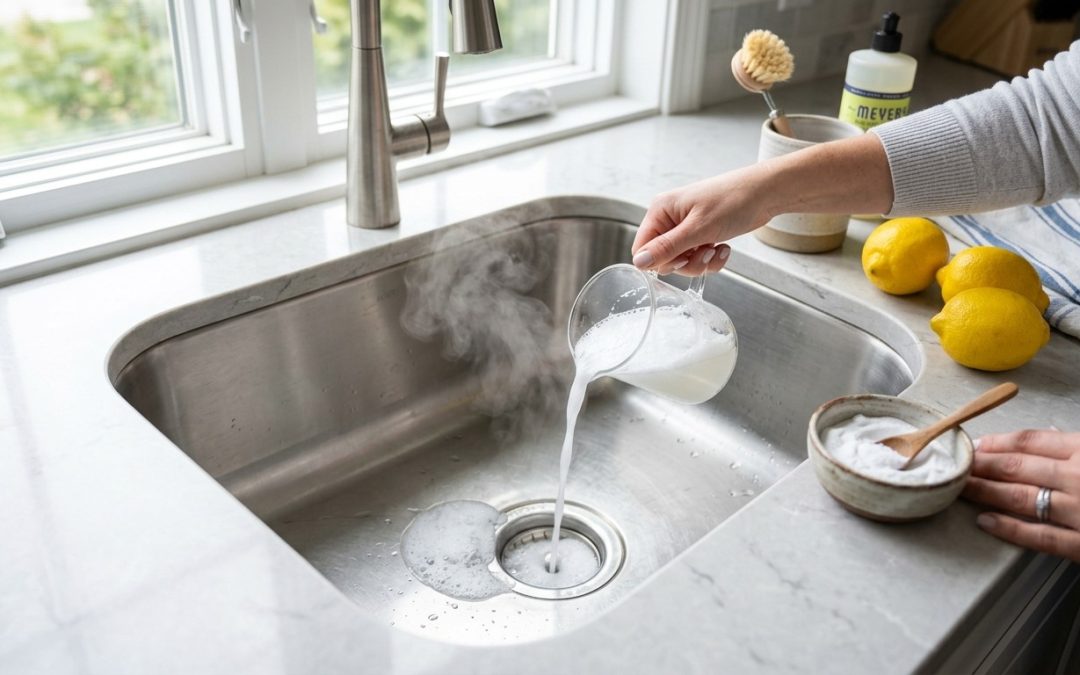
2. Use Baking Soda and Vinegar
This classic combination breaks down organic buildup and neutralizes odors without harsh chemicals.
- Pour half a cup of baking soda down the drain
- Follow with one cup of white vinegar
- Let it fizz for 10 to 15 minutes
- Flush with hot water
Repeat if the smell persists. This method is safe for most drains and garbage disposals, and it costs almost nothing compared to store-bought drain cleaners.
3. Clean the Garbage Disposal
If you have a disposal, it is often the hidden culprit. Food particles collect under the splash guard and around the blades, where they rot quietly.
- Turn off the power to the disposal
- Remove visible debris from the splash guard
- Scrub the inside with a brush and dish soap
- Run cold water while grinding ice cubes and lemon peels
- Finish with a baking soda and vinegar flush
Lemon peels help freshen the smell, while ice helps knock loose buildup off the blades. Doing this once a week keeps odors from returning.
4. Clean the P-Trap
The P-trap holds water to block sewer gas. If it dries out or fills with debris, odors escape directly into your kitchen.
- Place a bucket under the trap
- Unscrew the trap carefully
- Remove debris and scrub the inside
- Reattach and run hot water for a few minutes
If you are not comfortable removing plumbing parts, call a professional. A damaged or improperly reattached trap can leak and cause bigger problems.
5. Check for Sewer Gas Issues
If the smell is strong, constant, or comes from multiple drains, it may be sewer gas rather than simple buildup.
Signs include:
- Smell in more than one sink or drain
- Gurgling sounds when draining
- Slow drainage throughout the house
This usually requires a licensed plumber to inspect the vent stack or main line. Sewer gas is a health concern, not just an odor problem.
6. Use an Enzyme Drain Cleaner
Enzyme cleaners use bacteria to break down organic waste naturally. They are gentler than chemical drain cleaners and safe for most pipes.
- Pour the cleaner into the drain before bed
- Let it sit overnight
- Flush with hot water in the morning
Use enzyme cleaners monthly for best results, especially in kitchens where grease and food particles are common.
7. Avoid Chemical Drain Cleaners When Possible
Chemical cleaners can damage pipes, harm the environment, and are dangerous if splashed. They also often fail to address the root cause. Use them only as a last resort and never mix them with other cleaning products.
Preventing the Smell From Coming Back
Once the odor is gone, prevention keeps it away. These habits take only minutes but save hours of frustration.
- Run hot water for 30 seconds after each use
- Never pour grease or oil down the drain
- Use a drain strainer to catch food particles
- Clean the garbage disposal weekly
- Flush drains with baking soda and vinegar monthly
- Schedule professional drain cleaning once a year
Small, consistent habits are the difference between a fresh-smelling kitchen and a recurring plumbing headache.
When to Call a Professional
Some situations require expert help:
- The smell returns within days
- Multiple drains smell
- Water drains slowly or backs up
- You suspect a broken pipe or sewer line
- The smell is accompanied by gurgling or bubbling
A licensed plumber can identify the root cause and recommend the safest, most cost-effective solution. Attempting to fix a sewer line issue yourself can void warranties and lead to more expensive damage.
Long-Term Benefits of Fixing the Smell
Taking care of a smelly kitchen sink provides more than a fresh scent.
Benefits include:
- A cleaner, more hygienic kitchen
- Fewer clogs and plumbing emergencies
- Longer lifespan for your pipes and disposal
- Lower risk of sewer gas exposure
- Better indoor air quality
- Greater peace of mind
Preventive maintenance is always cheaper than emergency repairs, and it protects the value of your home.
Choosing a Reliable Plumbing Service
When hiring help, look for providers that offer:
- Licensed and insured plumbers
- Experience with drain and sewer issues
- Transparent pricing
- Emergency services
- Proper tools and safety practices
- Positive customer reviews
Working with experienced professionals ensures the problem is fixed correctly the first time, saving you money and stress in the long run.
Conclusion
A rotten egg smell in your kitchen sink is unpleasant, but it is rarely a mystery. In most cases, the cause is organic buildup, a dirty disposal, or a dried-out P-trap. With boiling water, baking soda, vinegar, and a little patience, you can eliminate the odor yourself. If the smell returns or spreads, it is time to call a professional.
By combining quick fixes with regular maintenance, you can keep your kitchen sink smelling fresh, your pipes flowing freely, and your home safe and comfortable for everyone who walks through it.
FAQs
1. Why does my kitchen sink smell like rotten eggs?
The smell is usually caused by hydrogen sulfide gas produced when organic material like food and grease decomposes inside the drain, garbage disposal, or pipes. A dried-out P-trap or sewer gas backup can also cause it.
2. Is a rotten egg smell in the sink dangerous?
In small amounts, it is mostly a nuisance. However, if the smell is strong or comes from multiple drains, it may indicate sewer gas exposure, which can cause headaches, nausea, and other health issues. In that case, call a professional.
3. How do I get rid of the smell quickly?
Start with boiling water, then use a baking soda and vinegar flush. If the smell persists, clean the garbage disposal and P-trap. For recurring odors, use an enzyme drain cleaner.
4. Can I use bleach to remove the smell?
Bleach can kill bacteria and reduce odor temporarily, but it can damage pipes and does not remove the organic buildup causing the smell. Baking soda, vinegar, and enzyme cleaners are safer and more effective long-term.
5. How can I prevent the smell from coming back?
Run hot water after each use, avoid pouring grease down the drain, use a strainer, clean the disposal weekly, and flush drains monthly with baking soda and vinegar. Annual professional drain cleaning also helps.