
Why Deep Sewer Blockages Can’t Be Fixed by Normal Cleaning
Many homeowners assume that all drain and sewer problems can be solved with basic cleaning methods such as plungers, chemical cleaners, or simple drain flushing. While these methods may temporarily improve minor blockages, they often fail when the real problem is located deeper within the sewer system.
Deep sewer blockages are more complex than standard drain clogs. They occur inside underground pipes that are not easily accessible, making them difficult to diagnose and remove without professional equipment.
Understanding why normal cleaning methods fail is important for preventing repeated drainage issues and avoiding costly long-term damage.
What Is a Deep Sewer Blockage?
A deep sewer blockage refers to a clog or obstruction that occurs inside the main sewer line or underground drainage system.
Unlike surface-level clogs in sinks or floor drains, deep blockages are located further down the pipe system and often affect multiple drainage points in a property.
Common signs include:
- multiple drains clogging at the same time
- foul smell coming from drains
- slow drainage in toilets and sinks
- gurgling sounds in pipes
- water backing up unexpectedly
These symptoms usually indicate a deeper issue within the sewer line.
Why Normal Cleaning Methods Don’t Work
Basic drain cleaning methods are designed for minor surface blockages, not deep structural problems.
1. Limited Reach of Tools
Plungers and household drain cleaners only affect the top portion of the drainage system. They cannot reach deep sewer lines located underground.
2. Partial Blockage Removal
Even if a small portion of the blockage is cleared, the remaining buildup inside the pipe can quickly cause the problem to return.
3. Chemical Cleaners Are Ineffective
Chemical drain cleaners may dissolve small organic matter, but they are not strong enough to break down:
- grease layers
- hardened sludge
- root intrusion
- collapsed pipe sections
4. Structural Pipe Issues Cannot Be Solved
If the sewer pipe is damaged, cracked, or misaligned, no cleaning method will fix the underlying issue.
Common Causes of Deep Sewer Blockages
Deep sewer problems usually develop over time due to long-term buildup or physical damage.
Grease and Fat Accumulation
Cooking grease and oil can harden inside pipes, forming thick layers that restrict water flow.
Tree Root Intrusion
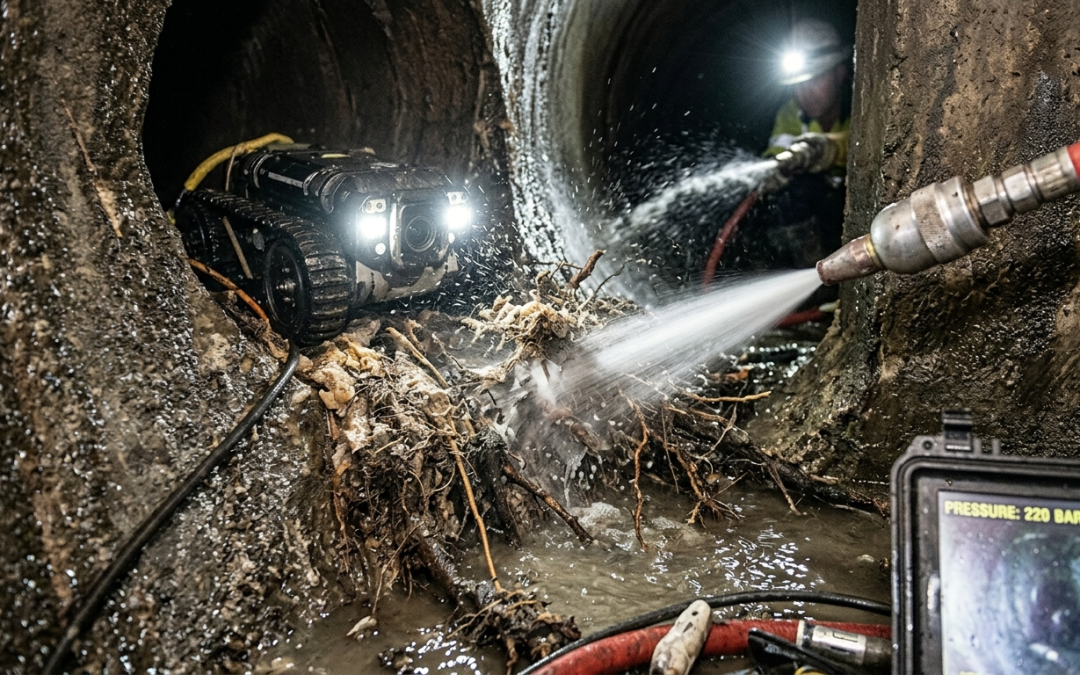
Tree roots naturally grow toward water sources and can enter small cracks in underground pipes, eventually causing severe blockages.
Pipe Collapse or Damage
Old or poorly installed pipes may crack, collapse, or shift, blocking water flow completely.
Foreign Objects in Sewer Lines
Items accidentally flushed or washed down drains can become trapped in deeper sections of the system.
Heavy Sediment Build-Up
Over time, dirt, sand, and debris can settle inside sewer pipes, narrowing the passage for water flow.
Why Deep Blockages Affect the Whole Property
Unlike small drain clogs, deep sewer blockages impact the entire drainage system.
This can lead to:
- multiple drainage points backing up
- wastewater overflow
- unpleasant odors throughout the property
- reduced hygiene and sanitation
- potential property damage
Because the blockage is located in the main line, every connected drain is affected.
Signs You Are Dealing With a Deep Sewer Issue
Homeowners should watch for early warning signs such as:
- all drains draining slowly at the same time
- toilets bubbling or gurgling
- sewage smell inside or outside the home
- water pooling near floor drains
- frequent recurring blockages
If these issues occur repeatedly, it usually indicates a deeper sewer line problem rather than a simple clog.
Professional Solutions for Deep Sewer Blockages
Deep sewer problems require professional tools and techniques.
High-Pressure Water Jetting
This method uses strong water pressure to remove grease, sludge, and debris from inside pipes.
CCTV Drain Inspection
A small camera is inserted into the pipe system to locate the exact cause of the blockage.
Mechanical Rodding
Specialized equipment is used to break through tough obstructions deep inside pipes.
Pipe Repair or Replacement
If the pipe is damaged, sections may need to be repaired or replaced to restore proper flow.
Why Professional Cleaning Is More Effective
Professional drainage services provide long-term solutions rather than temporary fixes.
Benefits include:
- accurate problem diagnosis
- complete blockage removal
- prevention of recurring issues
- protection against pipe damage
- improved drainage system lifespan
This ensures the root cause of the problem is properly addressed.
How to Prevent Deep Sewer Blockages
Homeowners can reduce the risk of sewer issues by:
- avoiding grease disposal into sinks
- installing drain strainers
- scheduling regular drain inspections
- avoiding flushing non-degradable items
- maintaining outdoor drainage systems
Preventive care helps reduce costly repairs in the future.
Conclusion
Deep sewer blockages are complex problems that cannot be solved with normal cleaning methods. While basic tools may provide temporary relief, they do not address the underlying causes located deep within the drainage system.
Understanding the difference between surface clogs and deep sewer issues is essential for maintaining a healthy plumbing system. When problems persist, professional inspection and cleaning are the most effective solutions.
Early detection and proper maintenance can help prevent major drainage failures and protect the overall condition of the property.
More Info
FAQs
1. Why does my drain keep blocking even after cleaning?
Because the blockage may be deep inside the sewer line, which cannot be fully removed using basic cleaning tools.
2. What causes deep sewer blockages?
Common causes include grease buildup, tree roots, pipe damage, and accumulated debris inside underground pipes.
3. Can chemical drain cleaners fix sewer blockages?
No. Chemical cleaners only work on minor surface clogs and are not effective for deep sewer line issues.
4. How do professionals fix deep sewer blockages?
They use methods such as high-pressure water jetting, CCTV inspection, and mechanical cleaning tools.
5. How can I prevent sewer blockages?
Avoid disposing grease into sinks, use drain strainers, and schedule regular professional drain maintenance.