
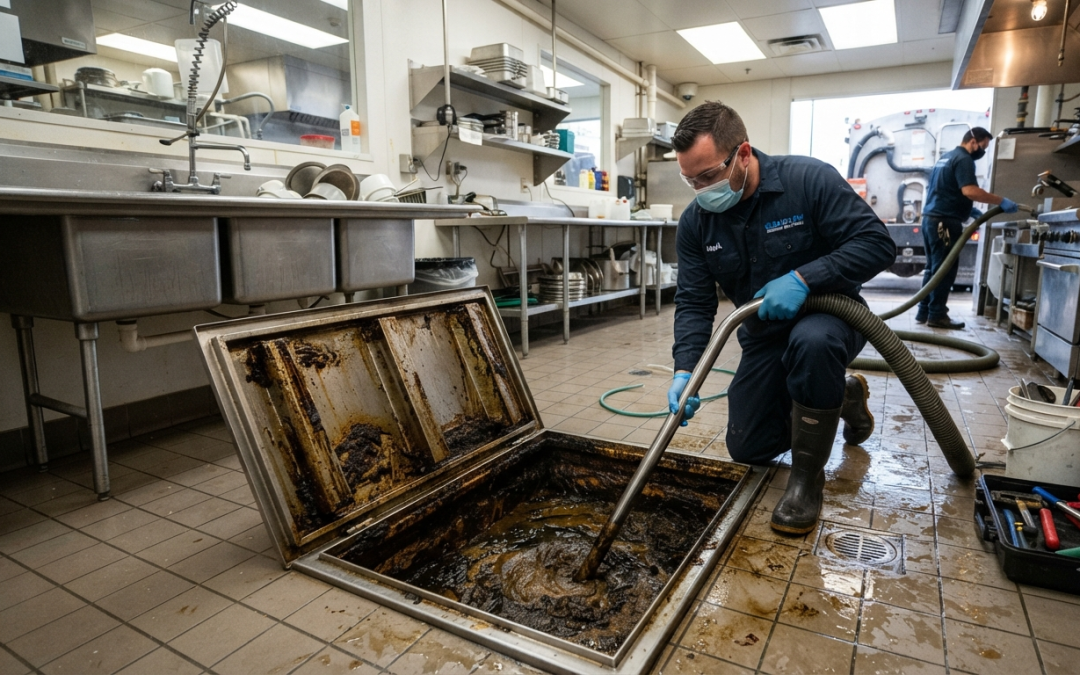
Why Grease Trap Maintenance Is Essential for Commercial Kitchens
Commercial kitchens generate large amounts of wastewater every day. During food preparation, cooking, and cleaning, fats, oils, and grease are washed into sinks along with food particles and other waste. Without an effective grease management system, these materials can enter the drainage network, gradually building up inside pipes and creating serious plumbing problems.
Grease traps play a critical role in preventing this from happening. Installed between kitchen sinks and the drainage system, they separate fats, oils, and grease from wastewater before it flows into underground sewer pipes. By capturing these materials, grease traps help reduce the risk of blocked drains, unpleasant odours, and expensive sewer repairs.
However, simply installing a grease trap is not enough. Over time, the collected grease and solid waste accumulate inside the trap. If the unit is not cleaned and maintained regularly, its effectiveness decreases, allowing grease to enter the drainage system and causing the same problems it was designed to prevent.
Routine grease trap maintenance is therefore essential for keeping commercial kitchens operating efficiently while protecting the entire drainage system.
What Is a Grease Trap?
A grease trap is a plumbing device specifically designed to separate fats, oils, grease, and food waste from kitchen wastewater.
As wastewater enters the grease trap, heavier food particles settle at the bottom while grease and oil float to the surface. The cleaner water then exits the trap and continues into the drainage system.
This simple process helps reduce the amount of grease entering underground pipes, preventing accumulation that could eventually restrict wastewater flow.
Grease traps are commonly installed in:
- Restaurants
- Cafés
- Hotels
- Food courts
- Catering businesses
- Bakeries
- Commercial kitchens
- Food processing facilities
For businesses that prepare food daily, grease traps are an essential part of maintaining an efficient drainage system.
Why Regular Grease Trap Maintenance Matters
Every grease trap has a limited capacity.
As grease, oil, and food waste continue to accumulate, the trap gradually becomes full. Once this happens, it can no longer separate grease effectively.
Instead, grease begins flowing into the drainage system where it sticks to the inside of pipes.
Over time this may result in:
- Slow drainage
- Pipe blockages
- Bad odours
- Wastewater backups
- Overflowing grease traps
- Emergency plumbing repairs
Regular maintenance removes accumulated waste before these problems develop.
Rather than waiting for a blockage to occur, scheduled servicing keeps the grease trap operating at maximum efficiency.
Protecting Commercial Drainage Systems
Commercial drainage systems experience much heavier usage than residential plumbing.
Restaurants and commercial kitchens may process hundreds or even thousands of litres of wastewater every day.
Without routine grease trap maintenance, fats and grease gradually accumulate inside underground sewer pipes.
Professional maintenance helps:
- Reduce grease accumulation
- Maintain wastewater flow
- Prevent recurring blockages
- Improve drainage performance
- Protect underground infrastructure
Keeping the drainage system clean supports uninterrupted business operations while reducing long-term maintenance costs.
Preventing Costly Drainage Repairs
Ignoring grease trap maintenance often leads to expensive plumbing problems.
When grease enters the drainage system, it hardens inside pipes and traps additional debris.
Eventually, complete blockages may occur, requiring emergency drain cleaning or sewer repairs.
Routine grease trap maintenance helps reduce the likelihood of:
- Emergency drain blockages
- Sewer overflows
- Wastewater backups
- Pipe damage
- Business interruptions
Preventive maintenance is often far more cost-effective than dealing with emergency drainage failures.
Supporting Hygiene and Food Safety
Cleanliness is essential in every commercial kitchen.
Poorly maintained grease traps can produce unpleasant odours and create unsanitary conditions that affect both staff and customers.
Regular grease trap maintenance helps:
- Reduce foul smells
- Improve kitchen cleanliness
- Support food safety practices
- Create a healthier working environment
- Maintain a professional business image
A clean drainage system contributes to smoother kitchen operations while supporting overall hygiene standards.
Businesses That Benefit Most From Grease Trap Maintenance
Although any commercial kitchen can benefit from routine servicing, some businesses require more frequent grease trap maintenance because they produce larger quantities of fats, oils, and grease.
These include:
- Restaurants
- Cafés
- Hotels
- Fast food outlets
- Catering companies
- School cafeterias
- Hospital kitchens
- Food processing factories
The frequency of maintenance depends on kitchen activity, wastewater volume, and the size of the grease trap, making professional assessments important for developing an effective maintenance schedule.
Warning Signs Your Grease Trap Needs Maintenance
Many grease trap problems develop gradually, making them easy to overlook during normal kitchen operations.
Business owners and kitchen managers should arrange professional maintenance if they notice any of the following warning signs:
-
Slow-draining sinks
-
Unpleasant odours near drains
-
Frequent drain blockages
-
Grease overflowing from the trap
-
Gurgling sounds from drains
-
Wastewater backing up into sinks or floor drains
-
Increased pest activity around drainage areas
Ignoring these warning signs can lead to more serious drainage issues that disrupt daily business operations and require expensive emergency repairs.
Why Professional Grease Trap Cleaning Is More Effective
Some businesses attempt to clean grease traps themselves. While basic cleaning may remove some surface grease, it often fails to remove all accumulated waste or identify developing drainage problems.
Professional grease trap maintenance uses specialised equipment and proven cleaning methods to thoroughly remove:
-
Hardened grease
-
Oil residue
-
Food waste
-
Sludge
-
Sediment
Professional technicians also inspect the grease trap for signs of wear, damage, or reduced performance that could affect the drainage system.
Regular professional servicing helps maximise the effectiveness and lifespan of the grease trap.
Developing a Preventive Maintenance Schedule
Every commercial kitchen has different maintenance requirements.
The ideal cleaning frequency depends on factors such as:
-
Kitchen size
-
Number of meals prepared
-
Type of food served
-
Wastewater volume
-
Grease trap capacity
-
Daily operating hours
Busy restaurants and food processing facilities often require more frequent maintenance than smaller cafés or bakeries.
Working with experienced drainage specialists allows businesses to develop a preventive maintenance schedule that matches their operational needs while reducing the risk of unexpected drainage failures.
Why Preventive Maintenance Saves Money
Some businesses postpone grease trap servicing in an effort to reduce operating expenses.
However, delaying maintenance often leads to much higher costs later.
Routine grease trap maintenance helps reduce expenses by:
-
Preventing emergency plumbing repairs
-
Reducing business downtime
-
Extending the lifespan of drainage systems
-
Lowering long-term maintenance costs
-
Reducing the likelihood of sewer blockages
-
Protecting underground pipes
Preventive maintenance is generally far more economical than repairing damaged drainage systems or dealing with emergency sewer overflows.
Environmental Benefits of Proper Grease Trap Maintenance
Maintaining grease traps does more than protect individual businesses.
It also helps reduce the amount of fats, oils, and grease entering public sewer systems.
Effective grease trap maintenance helps:
-
Reduce sewer blockages
-
Improve wastewater flow
-
Protect municipal drainage infrastructure
-
Support responsible waste management
-
Minimise environmental impact
Businesses that maintain their grease traps contribute to cleaner and more reliable drainage systems for the wider community.
Long-Term Benefits of Grease Trap Maintenance
Routine grease trap maintenance provides many long-term advantages for commercial kitchens.
Benefits include:
✔ Prevents drain blockages
✔ Protects underground sewer pipes
✔ Improves drainage performance
✔ Reduces unpleasant odours
✔ Supports food hygiene
✔ Reduces emergency repair costs
✔ Extends drainage system lifespan
✔ Keeps business operations running smoothly
Regular maintenance protects both the drainage system and the business by preventing avoidable plumbing problems before they occur.
Grease Trap Maintenance Is an Investment in Your Business
Commercial kitchens rely on efficient drainage every day.
When grease traps are properly maintained, wastewater flows smoothly, kitchen hygiene improves, and the risk of unexpected drainage failures is significantly reduced.
Rather than viewing grease trap cleaning as an occasional task, businesses should consider it an essential part of preventive facility maintenance.
By scheduling regular professional servicing, business owners can protect their drainage infrastructure, reduce operating costs, and maintain a cleaner, safer, and more efficient commercial kitchen environment.
Conclusion
Grease traps are an essential component of every commercial kitchen’s drainage system. By capturing fats, oils, grease, and food waste before they enter underground pipes, they help prevent blockages, improve wastewater flow, and protect valuable drainage infrastructure.
However, grease traps can only perform effectively when they are maintained regularly. As grease and solid waste accumulate, the trap gradually loses its ability to separate contaminants from wastewater. Without routine maintenance, businesses may experience slow drains, unpleasant odours, wastewater backups, recurring blockages, and costly sewer repairs.
Professional grease trap maintenance helps remove accumulated grease, inspect the condition of the trap, and identify potential drainage issues before they become major problems. Combined with a preventive maintenance schedule, regular servicing helps businesses maintain hygienic kitchen environments, reduce emergency plumbing costs, and extend the lifespan of their drainage systems.
For restaurants, cafés, hotels, catering companies, and other food-related businesses, investing in routine grease trap maintenance is a practical and cost-effective way to keep daily operations running smoothly while protecting long-term business assets.
FAQs
1. Why is grease trap maintenance important?
Grease trap maintenance removes accumulated fats, oils, grease, and food waste before they overflow into the drainage system. Regular servicing helps prevent blocked drains, unpleasant odours, wastewater backups, and costly sewer repairs.
2. How often should a commercial grease trap be cleaned?
Cleaning frequency depends on the size of the grease trap, the volume of wastewater produced, and the type of food prepared. Busy commercial kitchens usually require more frequent maintenance than smaller food businesses. A professional inspection can help determine the most suitable maintenance schedule.
3. What happens if a grease trap is not maintained?
Without regular maintenance, grease traps become full and lose their ability to separate grease from wastewater. This can lead to slow drainage, overflowing grease traps, recurring blockages, foul odours, and damage to underground sewer pipes.
4. Can I clean a grease trap myself?
Basic cleaning may remove some surface grease, but professional grease trap maintenance provides a much more thorough service. Trained technicians use specialised equipment to remove hardened grease, sludge, and food waste while inspecting the trap for signs of damage or reduced performance.
5. Which businesses should schedule regular grease trap maintenance?
Restaurants, cafés, hotels, food courts, bakeries, catering companies, commercial kitchens, supermarkets with food preparation areas, and food processing facilities should all arrange routine grease trap maintenance to protect their drainage systems and maintain hygienic operations.